Understanding RO4350B PCB Fabrication
In the realm of printed circuit boards (PCBs), the materials used can significantly influence performance, reliability, and ultimately, the success of electronic devices. A standout choice in this domain is the RO4350B laminate from Rogers Corporation. Known for its unique properties and capabilities, RO4350B is increasingly the go-to material for high-frequency applications. This article delves deep into the intricacies of RO4350B PCB fabrication, exploring its distinct advantages, applications, and the latest techniques involved in its manufacturing.
What Makes RO4350B Unique?
The RO4350B material distinguishes itself with its exceptional dielectric properties. Featuring a dielectric constant (Dk) of approximately 3.48, it is specifically engineered for high-frequency applications. This characteristic allows devices using RO4350B to perform more efficiently, especially in contexts like telecommunications, aerospace, and automotive industries where signal integrity is critical. Unlike PTFE materials, RO4350B utilizes a woven glass reinforcement, making it easier to process while maintaining excellent thermal and electrical performance.
Applications of RO4350B PCBs in Electronics
RO4350B PCBs are predominantly employed in applications that require consistent performance under demanding conditions. Some notable applications include:
- Telecommunication Equipment: Due to its low loss characteristics, RO4350B is ideal for microwave circuits, antennas, and high-frequency circuit boards.
- Aerospace Systems: The reliability and durability of RO4350B PCBs make them suitable for avionics and satellite communications.
- Automotive Electronics: With the automotive industry's shift towards more sophisticated electronics, RO4350B plays a role in automotive radar and navigation systems.
Comparing RO4350B with Other PCB Materials
When comparing RO4350B with traditional materials like FR-4, significant differences emerge. FR-4 is widely used for its cost-effectiveness but lacks the dielectric stability and thermal management that RO4350B offers. The latter’s ability to maintain its electrical performance over a wider temperature range and its lower loss factor make it preferable in high-speed applications. Additionally, while FR-4 typically has a Dk around 4.5, RO4350B’s lower Dk enhances signal clarity, making it an advantageous choice for RF applications.
Key Techniques in RO4350B PCB Fabrication
Understanding effective fabrication methods is crucial for maximizing the performance benefits of RO4350B laminates. The manufacturing process involves several key techniques that ensure high-quality outcomes.
Preparation and Design Considerations
Prior to fabrication, careful consideration must be given to the design of the PCB. Tools such as simulation software can help assess impedance and ensure that trace widths and layer stack-ups meet the specifications required for optimal performance. Furthermore, designers should consider factors like thermal management and the potential for signal crosstalk, which can be mitigated through effective layout strategies.
Effective Drilling and Cutting Methods
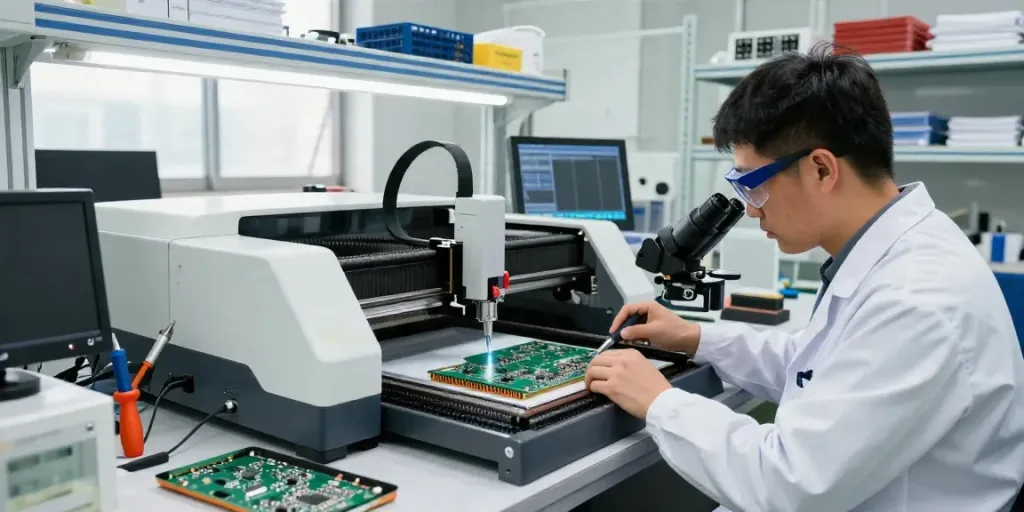
Drilling and routing RO4350B require precision to prevent damage to the laminate. Specialized drills with appropriate geometry help achieve clean holes, minimizing burrs that may affect subsequent processing. High-speed machining techniques can be employed to enhance efficiency during the cutting process while ensuring that the thermal properties of the material are preserved.
Plating Techniques for High Reliability
Plating is essential for ensuring strong electrical connections in PCBs. The use of electroless nickel immersion gold (ENIG) plating is common in RO4350B fabrication due to its ability to provide a reliable surface finish that is also compatible with high-frequency applications. Proper surface preparation and post-etch cleaning are critical for achieving optimal adhesion and minimizing the risk of defects.
Challenges in RO4350B PCB Production
Despite its advantages, the fabrication of RO4350B PCBs presents specific challenges that manufacturers must navigate to maintain quality and performance standards.
Common Manufacturing Issues and Solutions
Common issues encountered during production include delamination, warping, and surface defects. These problems often arise due to improper handling or inadequate curing of the materials. Implementing stringent quality control measures, including regular inspections and testing throughout the manufacturing process, can help identify and rectify these issues early.
Maintaining Quality Control Standards
Quality assurance is vital in ensuring that RO4350B PCBs meet industry standards and customer expectations. Adopting systems such as ISO 9001 can provide a framework for consistent quality management. Additionally, conducting rigorous testing, including thermal cycling and electrical reliability tests, ensures that the final product will perform reliably under operational stresses.
Cost Considerations in Fabrication
Cost is a significant factor in PCB fabrication, particularly with high-end materials like RO4350B. While the initial investment may be higher compared to FR-4, the long-term benefits of improved performance and reliability often justify the expense. Manufacturers must balance material costs, labor, and production efficiency to remain competitive without sacrificing quality.
Future Trends in RO4350B PCB Technology
As technology advances, the landscape of PCB manufacturing continues to evolve. RO4350B is expected to be at the forefront of several significant trends in the industry.
Emerging Innovations and Techniques
The integration of artificial intelligence and machine learning in PCB design and manufacturing processes is gaining traction. These technologies can optimize layouts, predict potential failures, and streamline production workflows, thereby enhancing the overall quality of RO4350B PCB fabrication.
Sustainability Practices in PCB Manufacturing
Environmental considerations are increasingly influencing PCB manufacturing. The push for sustainable practices has led to the development of greener materials and processes. Manufacturers are exploring ways to reduce waste and energy consumption, which not only benefits the environment but can also reduce production costs.
Market Trends for 2026 and Beyond
With the rise in demand for high-frequency devices, particularly in telecommunications and consumer electronics, the market for RO4350B PCBs is expected to expand. The shift towards 5G technology and the Internet of Things (IoT) will drive innovations and create new opportunities for manufacturers who can adapt quickly to changing market needs.
FAQs about RO4350B PCB Fabrication
What is the price of the RO4350B PCB board?
The cost of RO4350B PCBs can vary based on factors such as the complexity of the design, the quantity ordered, and the manufacturer. Typically, they are priced higher than standard FR-4 PCBs due to their superior material properties and fabrication techniques.
How do you ensure quality in RO4350B PCB fabrication?
Ensuring quality involves implementing a robust quality control system that includes regular inspections, adherence to industry standards, and comprehensive testing procedures throughout the fabrication process.
What is the dielectric constant of RO4350B material?
The dielectric constant of RO4350B is approximately 3.48, making it suitable for high-frequency applications and ensuring signal integrity in electronic designs.
Who uses RO4350B PCBs in their products?
Manufacturers in the telecommunications, aerospace, and automotive industries often utilize RO4350B PCBs due to their reliability and performance in high-frequency applications.
How does RO4350B compare to traditional FR-4 PCBs?
RO4350B significantly outperforms FR-4 in terms of dielectric stability, thermal management, and signal integrity, making it a preferred choice for advanced electronic applications despite its higher cost.