
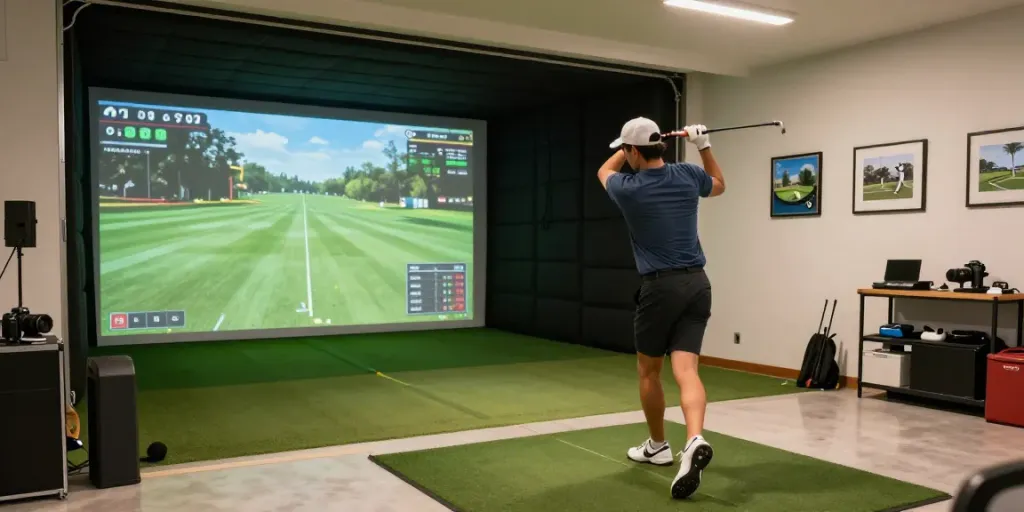
Understanding the Value of a Home Golf Simulator
Building a home golf simulator can be a game-changer for avid golf enthusiasts. Not only does it offer the convenience of practicing at home, but it can also provide significant financial savings compared to frequent trips to the driving range or paying for course access. However, before diving into this investment, it’s essential to assess whether a home golf simulator aligns with your playing habits and lifestyle.
When exploring options, how to build home golf sim provides comprehensive insights into the essential components, budgeting, and planning for your simulator setup. This guide covers everything from evaluating your space to choosing the right equipment, ensuring you make informed decisions throughout the process.
Is a Home Golf Simulator Right for You?
Before committing to a home golf simulator, consider your golf frequency and motivation. If you’re a casual player who only visits the golf course a couple of times a year, the investment in a simulator may not be justified. Conversely, if you find yourself at the driving range weekly, investing in a home setup can significantly enhance your practice routine while saving you money over time.
Comparing Costs: Home Simulator vs. Membership
When comparing costs, factor in the upfront investment of the simulator against the ongoing costs of range memberships or indoor facility fees. A basic home simulator setup can range from $1,500 to upwards of $10,000, depending on the components chosen. In contrast, regular range usage can accumulate costs that surpass your initial investment within a few seasons, making a home simulator a worthwhile consideration for dedicated golfers.
Evaluating Your Commitment to Regular Use
To truly assess if a home simulator is worth it, honestly evaluate your commitment to regular practice. Ask yourself if you will use it consistently over the next year. If the answer is yes, then a home simulator will likely enhance your enjoyment of the game and improve your skills.
Key Decisions for Your Home Golf Simulator Setup
Choosing the Right Room: Dimensions and Layout
The first step in setting up your home golf simulator is selecting an appropriate room. Remember, the dimensions of the space are critical, particularly the ceiling height, which can be a limiting factor. Ideally, you should have at least 10 to 12 feet of height to accommodate your swing comfortably. Ensure the width and length are also suitable, allowing for your swing and the necessary equipment.
First Things First: Selecting Your Launch Monitor
Your launch monitor is arguably the most crucial component of your simulator setup. It measures various aspects of your swing and ball flight, providing data that can significantly improve your game. Given this, it’s important to choose a monitor that suits your budget and performance needs. Some monitors are more advanced and provide better accuracy, while others are more affordable and still effective for casual users.
Budgeting for All Essential Components
When planning your simulator budget, consider all components involved, not just the launch monitor. Costs can accumulate quickly, so it's essential to include hitting mats, screens, projectors or TVs, and software. Allocate your budget wisely to ensure each aspect of your simulator meets your needs without needing immediate upgrades.
Building Your Home Golf Simulator: Step-by-Step
Preparing Your Space: Measurements and Adjustments
Once you have selected the room, take accurate measurements to ensure everything fits properly. This is the time to adjust your layout, ensuring ample space for your swing and equipment. Also, consider lighting, as you will need to minimize glare for better visibility during use.
Installation Process: DIY vs. Professional Help
The installation of a home golf simulator can be a DIY project or one that benefits from professional help. A basic setup with a net and mat can typically be completed in a few hours, while a more comprehensive setup with an enclosure may require a weekend of work. If you are not comfortable with electrical work or construction, hiring a professional for more complex installations can save you time and ensure the setup is done correctly.
Ongoing Maintenance and Upkeep Considerations
After installation, remember that your simulator requires maintenance. Regularly check and calibrate your equipment to ensure it performs optimally. Additionally, keep your hitting area clean and inspect all components for wear and tear to extend the lifespan of your simulator.
Common Pitfalls in Setting Up a Home Golf Simulator
Misjudging Space Limitations and Equipment Needs
A common mistake many make when building their home simulator is overlooking the space requirements. Ensure that your setup has adequate room, not just for the equipment but also for a comfortable playing experience. Many users may also misjudge the equipment needed, leading to subpar performance or the need for upgrades early on.
Overlooking Software Compatibility with the Launch Monitor
When selecting your launch monitor, ensure it is compatible with the software you wish to use. Not all monitors work with every software platform, and this can limit your simulator's capabilities. Always verify software compatibility before making a purchase.
Neglecting Future Upgrades: Planning for Expansion
Lastly, avoid the pitfall of neglecting future upgrades. If you plan to enhance your simulator down the line, design your initial setup with potential expansions in mind. This could mean leaving space for an impact screen or ensuring your power supply can handle additional equipment.
Final Checklist and Frequently Asked Questions
Checklist: What You Need Before You Start Your Build
- Room Measurements: Length, Width, and Height
- Launch Monitor: Research and Purchase
- Hitting Surface: Mat or Screen
- Display: Projector or TV
- Software: Ensure Compatibility with Launch Monitor
FAQs: Addressing Common Concerns About Home Simulators
What is needed to build a home golf simulator? You will need a space with appropriate dimensions, a launch monitor, a hitting surface, a display system, and compatible software.
How much does it cost to build a home golf simulator? A basic setup can start from $1,500, but costs can exceed $10,000 based on the components you choose.
Can I build my own golf simulator? Yes, many enthusiasts choose to build their own simulators, but it requires careful planning and measuring.
How to build a home golf simulator on a budget? Focus on essential components first, and consider starting with a net and basic launch monitor, then upgrade as your needs evolve.
Next Steps: Where to Go from Here After Setting Up
Once your simulator is set up, it’s time to start practicing! Take advantage of the features your new system offers, track your progress, and enjoy the convenience of playing golf whenever you want. As you settle into your new routine, be on the lookout for potential upgrades that can further enhance your experience.