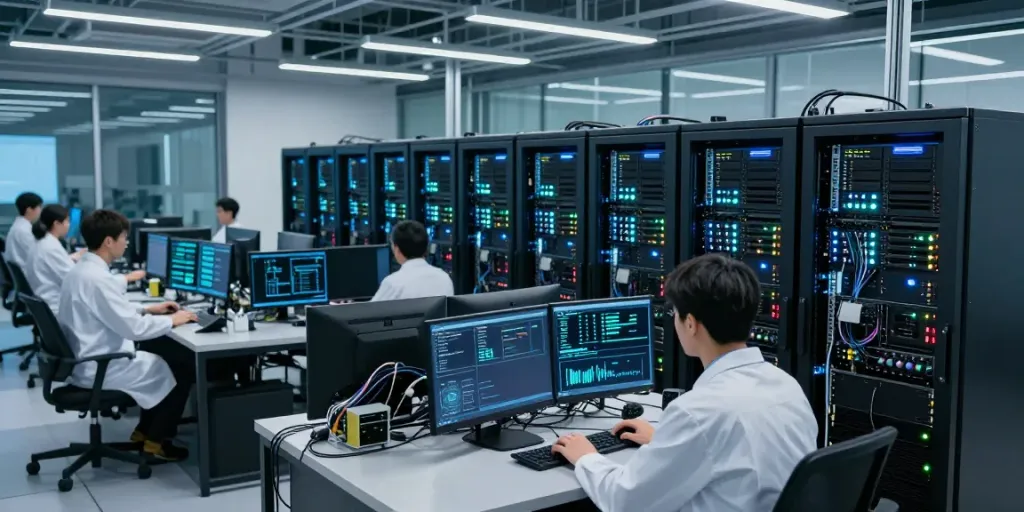
Understanding the AI Data Center Landscape
The rapid evolution of artificial intelligence (AI) technologies has led to a significant increase in demand for specialized infrastructure, particularly AI data centers. These facilities are designed to meet the enormous computational needs of AI applications, which often involve processing vast amounts of data at high speeds. As the AI token economy grows, understanding the foundational role of AI data centers becomes critical for stakeholders. This article will delve into what makes an AI data center distinctive, how they operate, and their impact on the overall AI ecosystem.
What is an AI Data Center?
An AI data center is a facility that houses the specific IT infrastructure required to train, deploy, and deliver AI applications and services. Unlike traditional data centers, which may primarily support varied workloads, AI data centers are purpose-built for high-density computing tasks that involve deep learning and machine learning. These centers are equipped with advanced technologies such as high-performance GPUs, optimized storage solutions, and enhanced networking capabilities to handle the unique demands of AI workloads.
Key Components of an AI Data Center
AI data centers include several critical components that contribute to their operational efficiency and effectiveness:
- High-Performance Computing (HPC) Systems: Leveraging multiple GPUs or TPUs to facilitate parallel processing, enabling faster data analysis.
- Scalable Storage Solutions: Systems designed to manage large datasets, often using RAID configurations and distributed storage architectures.
- Power and Cooling Infrastructure: Advanced systems to manage the heat generated by dense compute resources while ensuring reliable power supply.
- Network Fabric: High-speed interconnects that allow for rapid data transfer between computing nodes, minimizing latency in AI model training.
Importance in the AI Token Economy
AI data centers are integral to the AI token economy, as they provide the necessary infrastructure to support token-metered AI services. This includes powering GPU infrastructure that processes input and output tokens during AI workloads. The more efficient and reliable the data center, the better it can support these services, ultimately affecting the performance and scalability of AI applications.
How AI Data Centers Operate
Understanding the operational framework of AI data centers is vital for stakeholders in the AI ecosystem. These centers are structured to handle complex tasks, including processing large volumes of data while ensuring optimal performance and efficiency.
Architecture of AI Data Centers
The architecture of AI data centers typically consists of a multi-tier design that includes the following layers:
- Compute Layer: Houses the physical hardware, including high-density GPU clusters designed for AI workloads.
- Storage Layer: Incorporates storage solutions that efficiently handle data input/output needs.
- Network Layer: Composed of high-speed networking equipment that ensures low-latency communication.
This architecture allows AI data centers to scale horizontally, adding more computing resources as demand increases while maintaining high levels of efficiency.
Power and Cooling Requirements
AI workloads are power-intensive, and as such, the cooling systems in AI data centers must be robust and efficient. These centers utilize advanced cooling mechanisms, such as:
- Liquid Cooling: Circulates cooling liquid around the hardware to dissipate heat effectively.
- Chilled Beams: Uses convection to cool the environment efficiently.
Maintaining optimal temperatures is essential not only for equipment longevity but also for ensuring consistent performance in AI processing tasks.
Data Processing and Management
Data processing in AI data centers is a complex task that involves several stages, including data ingestion, processing, and retrieval. With AI applications relying heavily on real-time data processing, effective management systems are paramount. These systems often employ:
- Automated Data Pipelines: To facilitate smooth transitions of data between storage and analysis stages.
- Monitoring Tools: To track performance metrics and ensure operational efficiency.
AI Data Center Power Plans
A significant aspect of participating in an AI data center ecosystem is understanding the available power plans, which dictate how power resources are allocated to various workloads.
Types of Power Plans Available
AI data centers offer multiple power plans tailored to different operational needs. Common types include:
- Core Power Access: Provides basic power support for essential operations.
- Enhanced Power Access: Offers additional capacity for growth and more demanding workloads.
- Advanced Power Access: Designed for enterprises requiring substantial energy reserves.
How to Choose the Right Plan
Selecting the appropriate power plan involves evaluating your organization's specific AI workload requirements, financial budget, and growth projections. Considerations may include:
- Estimated power consumption rates associated with AI models.
- Scalability needs for future projects.
- Budget constraints set by leadership.
Benefits of Participating in Power Plans
Engaging in power plans within an AI data center can yield several competitive advantages, such as:
- Cost Efficiency: Streamlined operational costs through targeted power allocation.
- Accessibility: Participants can scale their infrastructure investment based on actual demand.
- Increased Reliability: Enhanced uptime and performance assurances through structured energy support.
Measuring Success in AI Data Centers
Monitoring operational success within AI data centers is crucial for continual improvements and unlocking greater efficiency. Success can be gauged through various performance metrics, which align with the goals of the AI token economy.
Performance Metrics to Track
Effective measurement of performance within AI data centers can be achieved through tracking specific metrics such as:
- Compute Utilization: Measures the percentage of available compute resources being used.
- Energy Efficiency: Refers to the performance output relative to energy consumption, often expressed as PUE (Power Usage Effectiveness).
- Token Processing Efficiency: Balances the input and output tokens processed relative to energy consumed.
Calculating Contribution Rewards
In the context of the AI token economy, participants often receive rewards based on their contributions to the data center's power resources. These rewards are calculated through:
- Tracking the amount of electricity consumed for AI tasks.
- Calculating the associated token processing results generated from fluid workloads.
- Applying any applicable rules set forth in the power plan to determine payout amounts.
Case Studies of Successful AI Data Centers
Examining existing AI data centers provides valuable insights into best practices and operational efficiencies. Examples include:
- Google Cloud AI: Focused on optimizing energy consumption while maintaining high performance, contributing to both economic and environmental goals.
- Amazon Web Services (AWS): Implements cutting-edge AI technology to deliver scalable and efficient services across industries.
The Future of AI Data Centers
The landscape of AI data centers is set to evolve significantly in the coming years as new technologies emerge and existing methodologies are refined. Understanding potential trends and challenges will be vital for stakeholders.
Trends and Innovations for 2026
Several key trends are anticipated to shape the future of AI data centers, including:
- Green Technologies: A growing emphasis on sustainability, leading to the integration of renewable energy sources and energy-efficient designs.
- AI-driven Management Systems: Employing machine learning algorithms to predict and optimize resource needs automatically.
Challenges Facing AI Data Centers
While the future looks promising, AI data centers will face challenges such as:
- Resource Allocation: Managing the balance between energy consumption and computational demands as workloads become more complex.
- Cost Management: Navigating fluctuating energy prices and the implications on operational budgets.
Emerging Technologies and Considerations
Innovations such as quantum computing and edge AI are set to redefine the operational capabilities of data centers. Organizations need to remain adaptable and forward-thinking, integrating these emerging technologies to stay competitive.
What are the main challenges faced by AI data centers?
AI data centers grapple with various challenges, including high energy demands, the need for advanced cooling solutions, and the pressure to maintain uptime while optimizing costs. Adapting to technological advances swiftly is crucial to overcoming these hurdles.
How are AI data centers contributing to the environment?
Many AI data centers are increasingly focusing on sustainability practices by utilizing renewable energy sources, implementing energy-efficient cooling systems, and optimizing resource usage to reduce their carbon footprint.
Who are the key players in the AI data center market?
Key players in this market include major cloud service providers like Google, Amazon, and Microsoft, as well as specialized companies dedicated to building and operating AI-focused data centers, such as Nvidia and IBM.
What technologies are shaping future AI data centers?
Technologies such as advanced cooling systems, high-capacity GPUs, machine learning algorithms for resource management, and renewable energy sources are shaping the design and operation of future AI data centers.
How can businesses effectively utilize AI data centers?
Businesses can effectively utilize AI data centers by aligning their computational needs with the right power plans, continuously monitoring performance metrics, and leveraging advancements in AI technology for data processing and management.